


The Question I Asked Nearly Every Patient
I have spent 14 years as an outpatient physical therapist, working with people dealing with morning neck stiffness, shoulder tightness, and restless sleep.
And for most of that time, I heard the exact same complaint over and over.
During their initial evaluation, I always ask: "What time of day does your neck feel the tightest?"
Hardly anyone says late afternoon after a workday. Almost everyone gives the same answer: "The first ten seconds out of bed."
That stiffness shows up after seven or eight hours in bed, supposedly resting. People wake up turning their entire upper body just to check their blind spot, or standing under hot shower water for twenty minutes just to loosen up enough to get dressed.
People with recurring stiffness were stuck choosing between a flat pillow that leaves their neck arch floating over empty air, or stacking two pillows that bent their head forward and strained their neck and shoulders.
- A tight, pulling ache at the base of your neck the moment you wake up
- Turning your whole upper body to check your blind spot instead of your head
- Waking up at 3 a.m. to fold, punch, or stack your pillow again
- Rolling onto your side and waking with a cramped, achy shoulder from sleeping on it wrong
What I Found
For years I tried recommending nearly every major pillow style I could find.
They all solved one problem and ignored the other: fluffy down pillows that collapse into a pancake by midnight, or contour pillows that feel like concrete blocks and trap heat.
About three years ago, during a trip to Kanazawa, Japan, I visited an old merchant residence turned into a local museum. Behind a velvet cord sat a traditional Japanese pillow called a takamakura.
It was a wooden base with a firm, padded fabric roll tied across the top.
The padded roll sat directly beneath the curve of the neck. The back of the head rested behind it, unforced and level.
For centuries, Japanese sleepers supported the neck arch directly so the neck stayed supported in its natural contour and neck muscles could fully rest. Over the past century, fluffy Western pillows took over, and direct neck support disappeared.
Introducing Morrow
Morrow is the butterfly contour pillow built around that exact principle: a Japanese-inspired cervical roll paired with high-density slow-rebound foam, providing the missing neck support behind morning stiffness.
The Technique Behind The Support
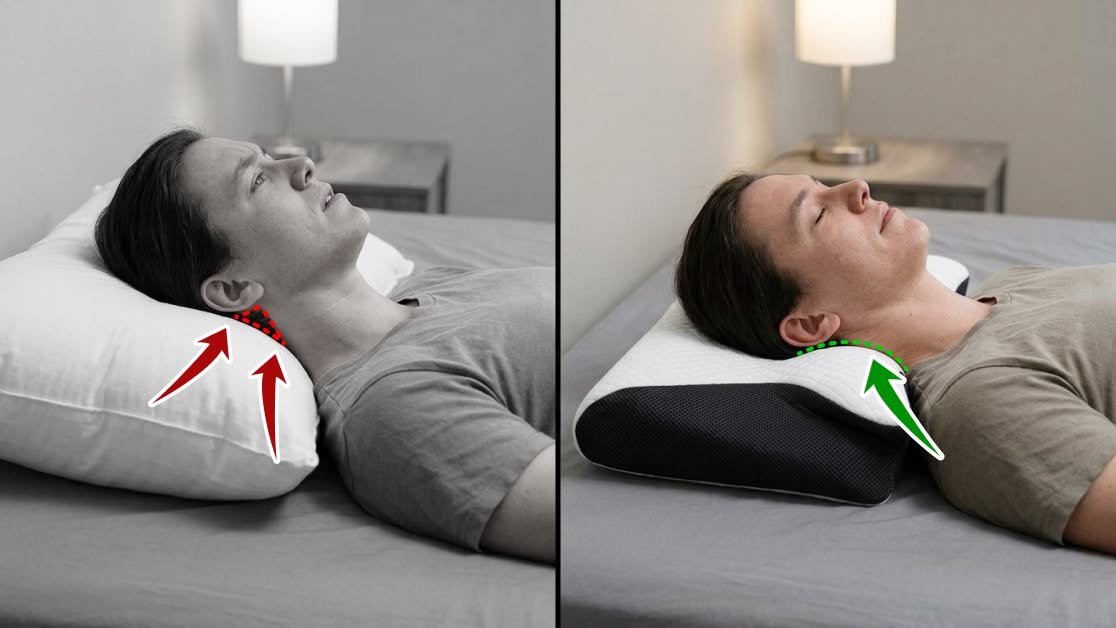
Lie on your back on a standard pillow tonight and slide your hand under your neck. That empty space under your cervical curve is the "neck gap."
Standard pillows are built as a single flat block. They prop up the back of your head, but leave your neck arch floating over empty air for seven to eight hours. Because nothing holds that curve, your neck muscles stay tense to hold your head in position. You wake up feeling like your neck worked an overnight shift.
When you turn onto your side, the problem gets worse. Your shoulder creates a gap of roughly 5 inches between your ear and the mattress. A standard pillow collapses under your weight, tilting your head downward while putting pressure on your shoulder and bending your neck.
Dedicated ergonomic support zones make the difference between waking up stiff or waking up comfortable.
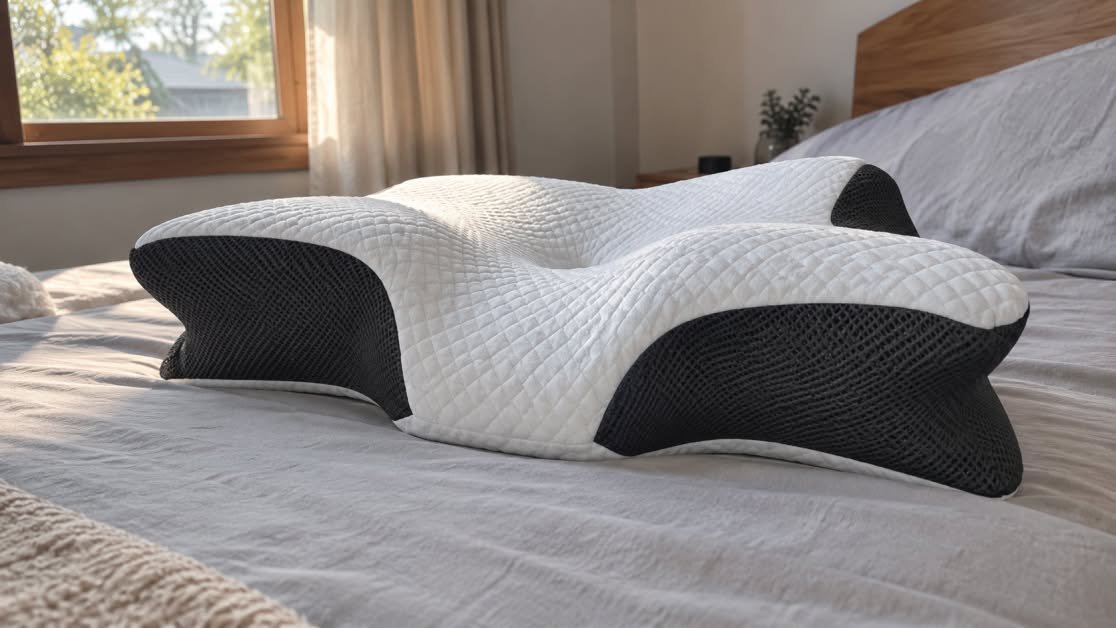
A raised 4.7-inch front contour meets the natural curve of your neck, paired with a recessed 3.7-inch center hollow that lets your head rest level without pushing your chin forward.

Adaptive memory foam with a gradual 3-second response rate that cushions pressure points and holds its supportive shape all night long.
How It Actually Works
Instead of leaving your neck floating, Morrow fills the cervical gap so your neck and shoulder muscles can finally rest comfortably through the night.
Most pillows are too low for side sleeping. Morrow's raised 4.7-inch side wings keep your head and neck level, with contour cutouts giving your shoulder and arm space to rest naturally.
Generously sized at 24.4" x 14.6" x 4.7" to fit standard queen pillowcases, wrapped in a breathable zip-off washable cover that stays comfortable against skin.
Why People Are Switching To Morrow
I do not often ask people to report back on a pillow, but sleepers started sharing their results unprompted. Here is what they say after switching to Morrow:

"I had gotten so used to backing out of my driveway by turning my whole upper body from the waist because my neck felt locked up. After about ten days on Morrow, I caught myself looking smoothly over my shoulder to check traffic without that tight morning pull. That alone made it worth it."
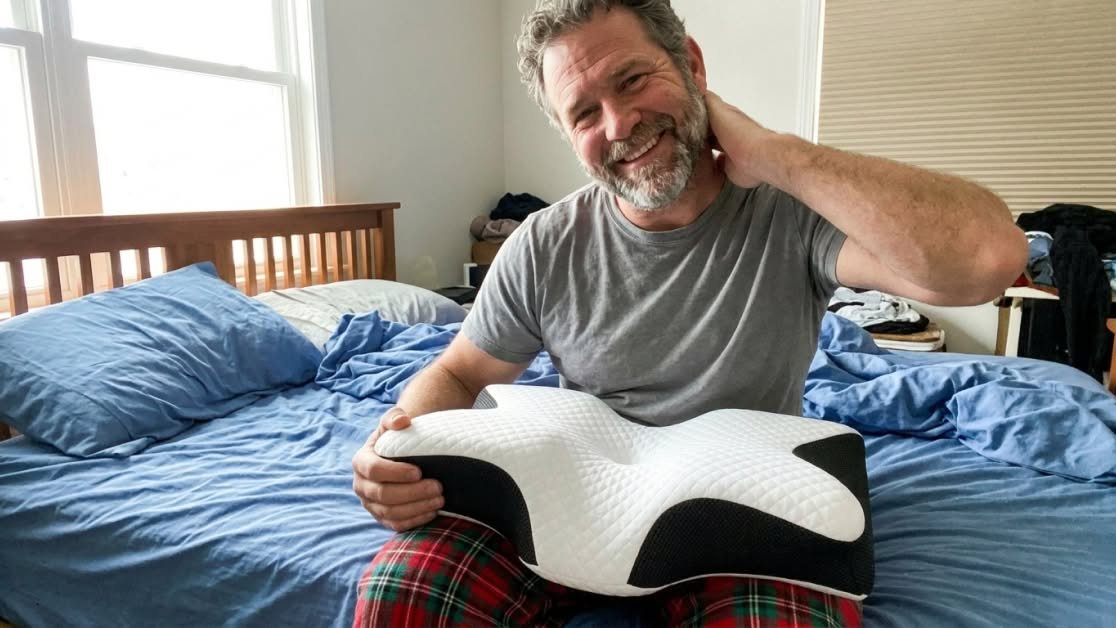
"I am a side sleeper with broad shoulders. For years I woke up every morning with an aching, squished shoulder from sleeping on it wrong. Now my arm slides naturally into the side cutout on Morrow. I have not had to toss and turn all morning to find a comfortable spot."

"The first two nights felt different because my neck was not used to actual support. The instructions said give it a week to adjust. By night four, my neck settled right into the contour. Now my old pillow feels like a folded bath towel."

"I have tried plenty of contour pillows that went flat or had a harsh chemical smell. This Morrow pillow aired out in an afternoon, and months later the edge still pops right back when I press on it. Supportive where I need it, yet comfortable all night."
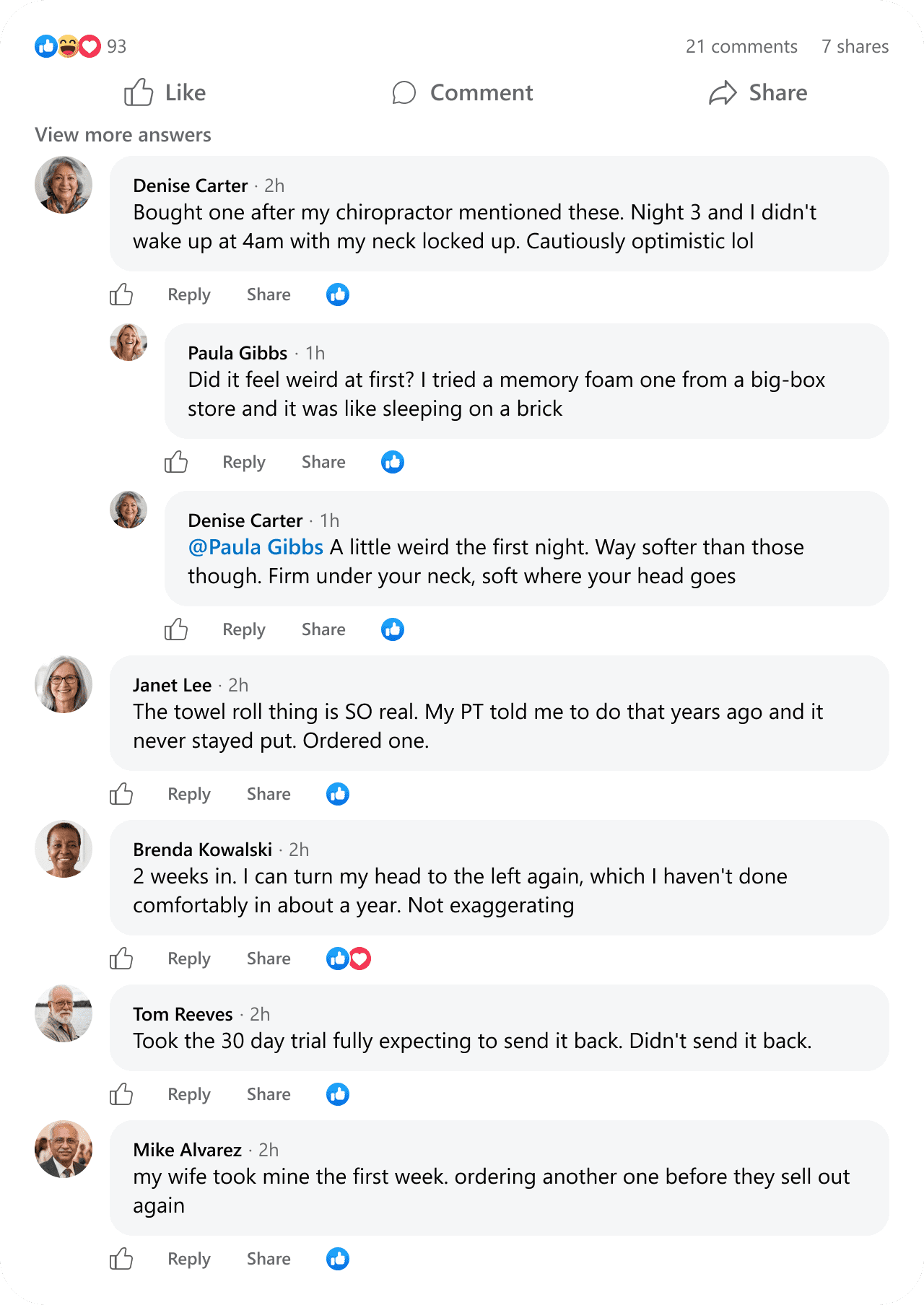
Check Out the Buzz on Social Media!
Sale - Get Up To 70% Off Today
This promotional batch pricing is only available while current inventory lasts.
Inventory Notice:
Demand has been high for this promotional batch. Because Morrow is molded from high-density slow-rebound foam rather than cheap cut foam, units are produced in dedicated manufacturing runs. Once the current allocation is claimed, the next production run may take several weeks.
NOTE: This product is NOT available on Amazon or eBay.